


Welcome to the wonderfully messy and absolutely addictive world of paint pouring on rocks!
If you’ve been curious about this fluid art technique but felt intimidated by all those gorgeous swirly masterpieces you see online, you’re in exactly the right place.
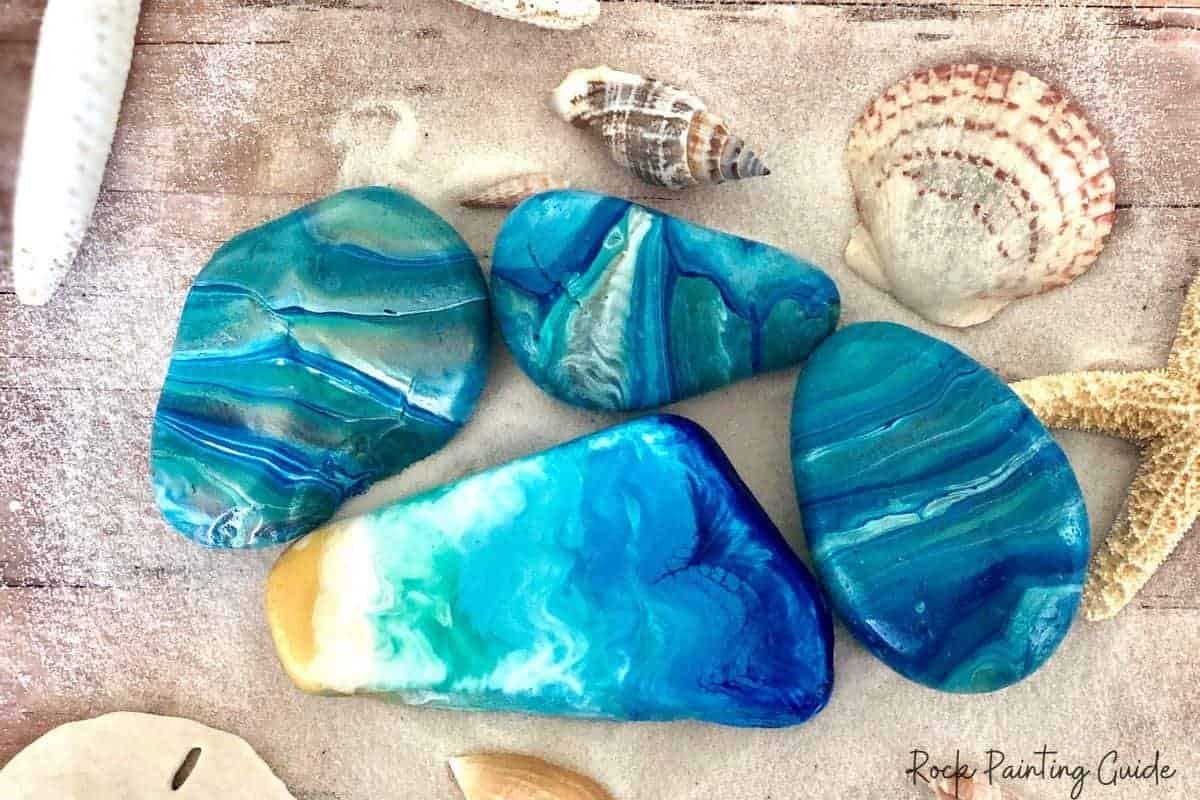
In this tutorial, I’m sharing two easy ways to make beach-inspired paint poured rocks.
The first is a straight pour, where you pour each color onto the rock one at a time for a more layered beach look.
The second is a dirty cup pour, where all the paint colors are layered in one cup first to create a marbled, swirled design.
Both methods are beginner-friendly and each one creates a unique beachy finish.
Table of Contents
Supplies You’ll Need
Here’s what you’ll need to get started on your paint pouring adventure:
The Essential Lineup:
- Craft Paint in whatever colors make you happy

- Pouring Medium – Liquitex pouring medium, Flood Floetrol, or Golden GAC800 are the most commonly used brands
- Rocks (Smooth, clean rocks (river rocks are your best friends here)
- Craft Sticks, stir sticks, or popsicle sticks whatever you have on hand
- Cups or containers for paint mixing
- Something to protect your workspace (cardboard, parchment paper, or a plastic tray)
- Gloves (seriously, save your manicure!)
- Reusable containers for rock pouring, cheap foil pans with a lip works well.
- A base for rock. You can use anything from wide bottle caps to an upside-down egg carton, it just needs to be big enough to hold your rock above the surface area for paint runoff. Make your own DIY Tray, keep reading.

 ,
,  , or
, or  are the most commonly used brands

The Fun Extras:
- Silicone and 91% Isopropyl Alcohol for creating cells and lacing effects.
- Straws for blowing paint around
- Glitter (because everything’s better with sparkles)
- Art Resin for super shiny gloss or high gloss sealer
 for super shiny gloss or
Getting your rocks ready for their makeover
First things first – let’s prep those rocks! Give them a good scrub with soap and water to remove any dirt or debris.
A quick wipe with isopropyl alcohol helps ensure they’re squeaky clean. Let them dry completely before moving to the next step.
Here’s a little pro tip: if you want your colors to really pop, consider giving your rocks a coat of white paint or gesso first.
It’s like giving your rock a fresh canvas to work with! Just make sure it’s completely dry before you start pouring.
Beach Pour Straight Pour Tutorial
A straight pour is a great choice if you want a little more control over where each color goes on the rock.
By pouring one color at a time, you can build the look of ocean water, sea foam, and sandy shoreline in separate sections.
This method works especially well for beach-themed paint pours because it creates soft layered bands that look like waves washing onto the sand.
Step 1: Set Up Your Beach Rock for a Straight Pour Techinque
Place your clean rock on a raised paint pouring tray so the extra paint can drip underneath instead of pooling around the rock.
For this setup, wooden skewers are placed across a foil pan to hold the rock in place while the paint flows over the sides.
This keeps the bottom from sitting in wet paint and makes cleanup much easier.

Step 2: Pour the First Ocean Color
Start with one of your blue or aqua paint colors and slowly pour it across one side of the rock.
Let the paint move naturally over the curved surface instead of trying to control it too much.
This first pour creates the base of the ocean look and helps the next colors blend into soft wave-like layers.

Step 3: Add Sandy Gold for the Beach
Add a sandy gold or tan paint color to one side of the rock to create the beach area.
Let the gold paint meet the blue and white so the colors blend slightly where the “water” touches the “sand.”
This gives the rock a coastal, beach-inspired look without needing to paint tiny details by hand.

Step 4: Let the Beach Colors Blend Together
After adding the sandy gold, continue pouring the remaining blue and aqua paint over the rock to soften the transition between the “water” and “sand.”
Let the paint run naturally over the sides so the colors create streaks, swirls, and a wave-like finish.
The white paint helps create that seafoam look, while the deeper blue adds contrast and makes the beach pour design stand out.

Step 5: Let the Paint Flow and Dry
Once all the colors are poured, leave the rock on the tray and let the paint continue dripping off the sides.
Do not move the rock too soon or the design may smear. Let your beach pour rock dry completely for at least 2 to 3 days before sealing it with a clear protective finish.
Optional Finishing Touch:
Once completely dry, you can sand the bottom of your painted rocks with light grit sandpaper to remove any dried paint bits.
Then you can paint the bottom or leave it natural – your choice!

Beach Rock Dirty Pour Tutorial
A dirty cup pour is perfect if you want a more blended and marbled beach rock design.
For this technique, the paint colors are layered together in one cup and then poured over the rock all at once.
As the paint flows, the blues, whites, and turquoise tones mix naturally to create swirling patterns, cells, and wave-like movement.
Every dirty pour rock turns out a little different, which makes this method extra fun to try.
Step 1: Layer the Paint Colors in One Cup
To create a beach-inspired dirty pour, start by adding your paint colors into one cup in layers.
Use shades like deep blue, aqua, turquoise, and white to give the rock an ocean look.
As the colors stack on top of each other, they begin to create beautiful cells and swirls that will show up once the paint is poured onto the rock.

Step 2: Pour the Paint Over the Rock
Once your paint is layered, slowly pour it over the top of your clean rock and let the paint flow down the sides.
A dirty pour works well because the colors blend naturally as they move across the surface.
The combination of blues, and whites creates a pattern that looks like rolling waves.

Step 3: Allow the Design to Fully Develop
As the rock dries, the layered colors begin to reveal more detail.
You’ll notice flowing stripes, soft swirls, and little cells that give each beach pour rock a one-of-a-kind finish.
This is one of the best parts of a dirty pour because every rock turns out slightly different, even when you use the same colors.
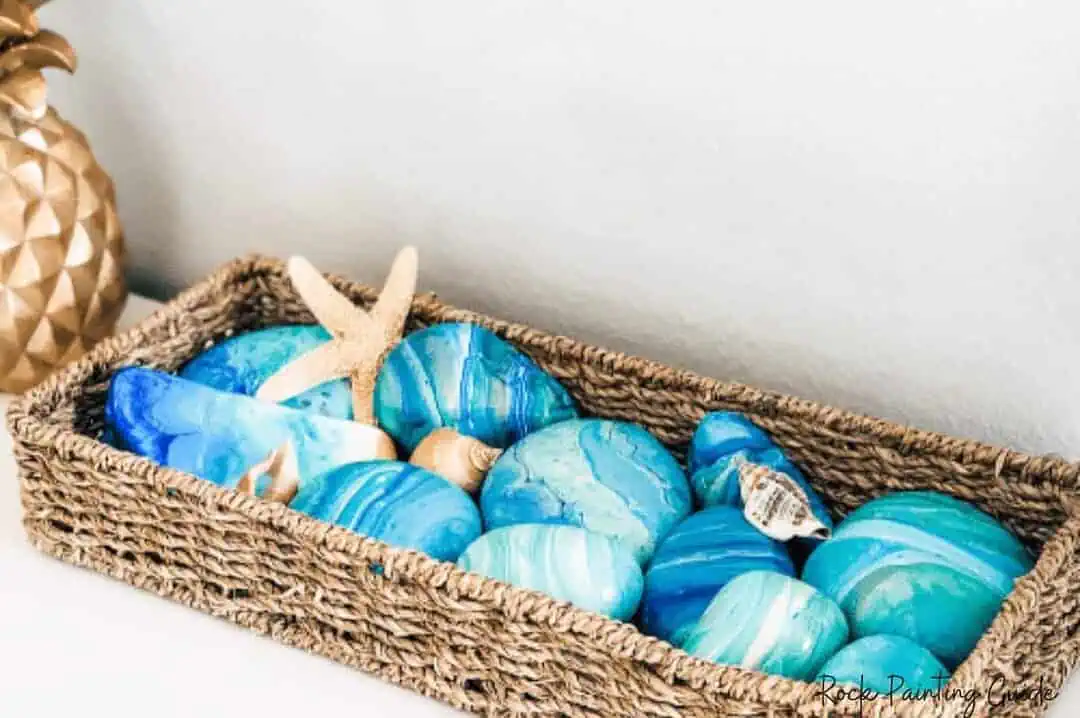
Once dry, your finished rocks will have a smooth marbled look with ocean-inspired shades of blue, aqua, white, and sandy gold.
These beach pour rocks are perfect for summer decorating, coastal-inspired crafts, or adding to a rock painting collection.
Each one has its own unique wave-like pattern that makes it look like a tiny piece of the beach.
Straight Pour vs. Dirty Cup Pour
Both of these beach rock paint pouring techniques create beautiful ocean-inspired results, but each one has its own look.
A straight pour gives you more defined sections of color and a layered beach effect, while a dirty cup pour creates a softer marbled finish with more natural blending.
If you like more control, try the straight pour first. If you enjoy surprises and one-of-a-kind patterns, the dirty cup pour is a great option.
Paint Pouring Techniques You’ll Want to Try
Now comes the really fun part! Here are some beginner-friendly techniques that’ll have you creating masterpieces in no time:
- Straight Pour: Simply pour paint side by side or layer colors directly onto your surface. Easy and satisfying!
- The Dirty Pour (No, It’s Not Actually Dirty!): This acrylic pour painting technique is as simple as it sounds. Layer different colored paints into one cup, then pour the whole beautiful mess over your rock. Watch in amazement as the colors naturally swirl and flow into each other.
- The Flip Cup Adventure: Place your rock upside-down on top of a cup filled with layered paint colors. In one swift motion, flip both the cup and rock over, then lift the cup away. Voilà – instant abstract art that’ll make you feel like a paint pouring wizard!
- The Swipe Technique: After pouring your paint, take a paper towel, palette knife, or even a piece of cardboard and gently swipe across the surface. This drags the colors and reveals amazing hidden patterns underneath. Add a few drops of silicone oil beforehand for some really cool lacing and cell effects!
- The Puddle Pour: This one’s perfect for beginners who want a bit more control. Simply pour small amounts of different colored paints directly onto your rock, one color at a time. The paints will naturally flow together, creating gorgeous, unpredictable patterns.
- Dutch Pour Magic: Grab a blow dryer or even a kitchen torch (carefully!) and use the airflow to move your paint around. This acrylic pouring technique creates wild, organic-looking effects that are absolutely mesmerizing to watch develop.
Want a deeper dive into these techniques? Check out my blog post on 8 Easy Paint Pouring Techniques for step-by-step details, videos, and tips!
DIY Paint Pouring Tray: Using What you have
This is perfect for using household items that you may already have.
I used a square foil baking pan for this diy paint pouring tray.
Punch holes along both sides. Stick wooden skewers in the holes to make a base for the rocks.
Once the paint has dried, you can peel it off and reuse the pan again.
You can also use this tray to base coat several rocks at once.
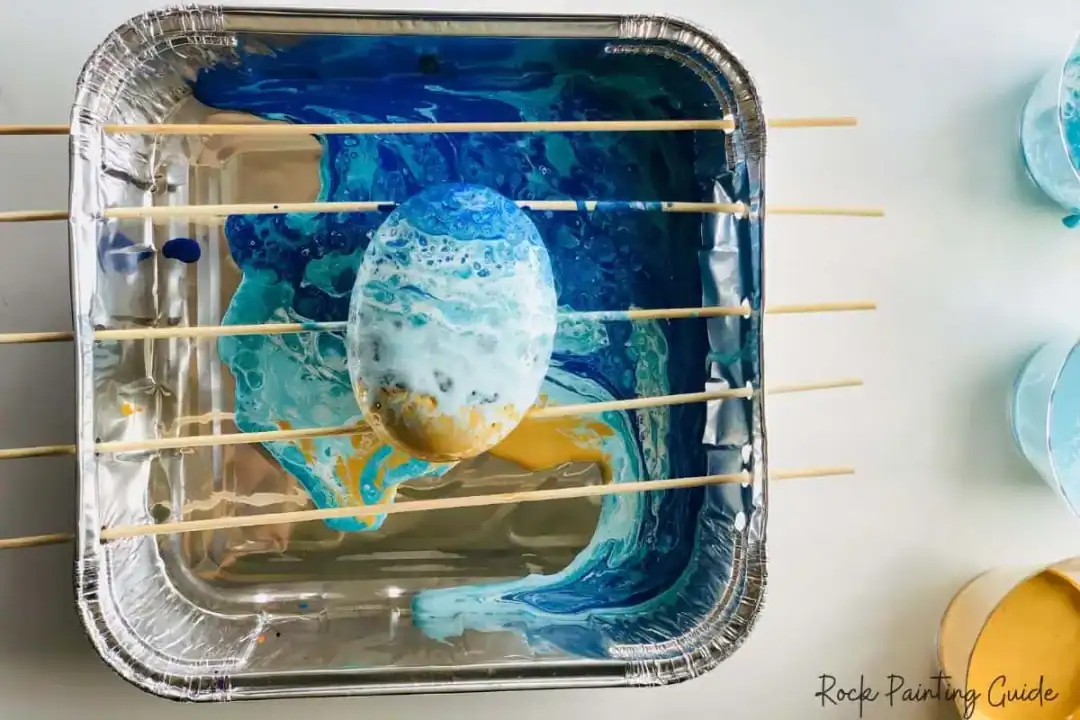
The best part? Once the paint has dried, you can peel it off and reuse the pan again and again.
You can also use this setup to base coat several rocks at once – it’s a real time-saver!
Creative Paint Pouring Ideas
- Galaxy Rocks: Mix deep blues, blacks, and whites with a sprinkle of glitter for an out-of-this-world effect.
- Ocean Vibes: Combine turquoise, blue, white, and a touch of sandy beige for a beachy feel.
- Sunset Magic: Blend warm oranges, yellows, and pinks for a gorgeous sunset-inspired design.
- Rainbow Celebrations: Use the tree ring technique with bright colors to create spiraling rainbow effects.
Pour Painting Tips for Beginners
- Get organized first: Before you start prepping paint with flow medium, gather all your supplies and have them ready.
- Create a dedicated workspace: Set up a clean area where you can prep, create, and leave your rocks to dry without having to move them.
- Protect your surfaces: Cover your table with plastic sheeting or something similar.
- Size matters: Use the smallest cups you can for your project. It makes combining colors easier and you’ll waste less paint.
- Mix gently: When combining pouring medium and paint, stir gently to eliminate air bubbles.
- Keep tweezers handy: They’re lifesavers for removing paint debris or stray hairs!
- Most importantly: Relax and have fun! Remember, there are no mistakes in paint pouring – only happy accidents!
Pour Painting on Rocks Step-by-Step YouTube Video!
I hope you found this tutorial for Paint Pouring on Rocks helpful.
Another fun way to paint rocks is by using Alcohol Inks! Check out our Alcohol Inks Guide, here.
Check out our Amazon Shop for our favorite rock painting supplies now!
More fun rock painting ideas
- Mandala Rock Painting for Beginners
- Ocean-Inspired Resin Pour on Rocks
- Squishmallows Painted Rocks
- Night Sky Galaxy Painted Rocks
Pin this image for later!

Love the Coastal Style, check out our new post, How to Make Beautiful Beach-Inspired Paint Pouring Art. There you will learn how to create easy and fun coastal style home decor with this paint pouring ideas.


Thanks for the inspiration, love trying something new😊
I have read so many pouring guides here on Pinterest… This was by far the easiest to follow, and understand! Thank you so much!
I’m loving this guide. It’s easy to follow and I like the information for buying paints, pouring medium etc. Thank you so much!
I enjoy this. I love how mine came out!
I did this with 20 kids aged 4 to 11. They loved it! The rockS turned out greaT. I used a long tin and they did 3 rocks each! Different color combos. Landscape store 2 to 3 inch mexican river rocks. Just gave them a rinse. Thanks for all the great ideas. It went without any problems. 63 awesome rocks.
is there a way to stop marks on back of rocks if using cooling rack or even flat in a dish as mine get marks or the back dried paint peels..what am i doing wrong?sorry for cap letters..cant seem 2 stop it..thx r any suggestions
Hi Roxane, you can lightly sand the bottom of painted rocks for a smooth surface.